Reuvers™ Breathing
The deeper you relax,
the better you perform.
Train your breathing with real-time quality feedback.
Get more oxygen from less air, and train your breathing across its whole range.
Zones indicate your nervous system activation. Green means relaxed, red means stressed.
What course participants say
Real-time zones show your nervous system state and give every breath-hold a quality mark. Here's what participants share.
Feedback from participants via WhatsApp and Zoom.
"I can feel the shift from doing to being."
"I sleep better. I rest better."
"I don't need to perform. I can just breathe."
"The holds feel hypnotic. It's meditative."
"My life quality has gone up."
"I feel more energy. I feel warmer."
"Being in a group keeps me accountable."
"I can breathe better in yoga class now."
"This is sustainable. I can do this for life."
"I'm not pushing anymore. I trust the method."
"It feels great to do these breathing exercises every day."
"I ran a marathon. I didn't expect to be able to run a marathon."
"I can feel the shift from doing to being."
"I sleep better. I rest better."
"I don't need to perform. I can just breathe."
"The holds feel hypnotic. It's meditative."
"My life quality has gone up."
"I feel more energy. I feel warmer."
"Being in a group keeps me accountable."
"I can breathe better in yoga class now."
"This is sustainable. I can do this for life."
"I'm not pushing anymore. I trust the method."
"It feels great to do these breathing exercises every day."
"I ran a marathon. I didn't expect to be able to run a marathon."
"I love the program. So much more enjoyable than my old breathing exercises."
"In two days, my breath-holds before and after sleep are so much longer."
"Feather breathing is so relaxing. I feel the difference immediately."
"I learned to sense my breathing response and keep it gentle."
"I can do weight training now without getting winded."
"I used to hyperventilate when speaking. Now I can talk without running out of breath."
"I thought relaxation and performance were opposite. Now I see they're connected."
"I'm learning to relax. I'm not trying to achieve something."
"I expected to learn breathing techniques. But I've exceeded my expectations already."
"This method teaches you to feel. Not just to push numbers."
"Feather breathing feels like a conversation with my body. It's not forced."
"I started at 13 seconds. Now I'm at 30 and climbing."
"I love the program. So much more enjoyable than my old breathing exercises."
"In two days, my breath-holds before and after sleep are so much longer."
"Feather breathing is so relaxing. I feel the difference immediately."
"I learned to sense my breathing response and keep it gentle."
"I can do weight training now without getting winded."
"I used to hyperventilate when speaking. Now I can talk without running out of breath."
"I thought relaxation and performance were opposite. Now I see they're connected."
"I'm learning to relax. I'm not trying to achieve something."
"I expected to learn breathing techniques. But I've exceeded my expectations already."
"This method teaches you to feel. Not just to push numbers."
"Feather breathing feels like a conversation with my body. It's not forced."
"I started at 13 seconds. Now I'm at 30 and climbing."
Individual experiences. Results vary.
Is This For You?
Four reasons to train your breath with zones.
Oxygen Efficiency
More oxygen from less air. Better physical and mental performance.
The Sweet Spot
Relaxed enough to enjoy but strong enough to improve your breathing.
High Stamina
Become more resilient. Handle more with less effort.
Calm Energy
Your nervous system settles. Calm, energized, and ready for the day.
The app
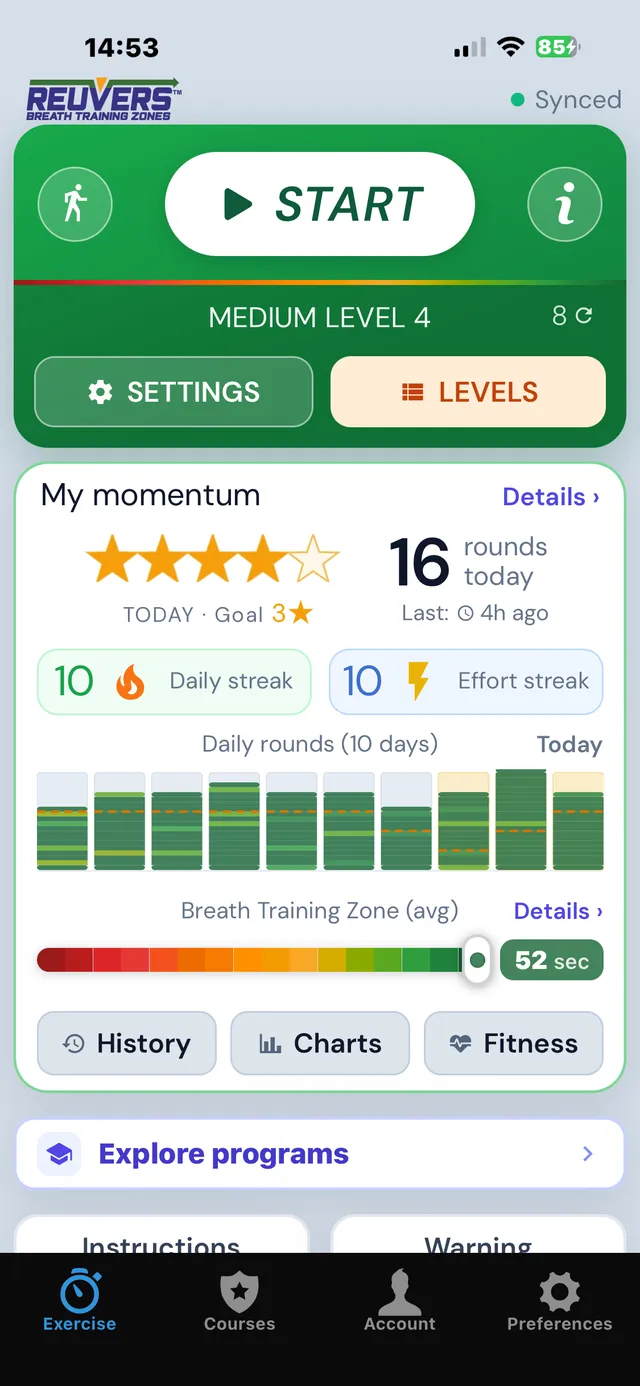
It reads your breath and adapts to you
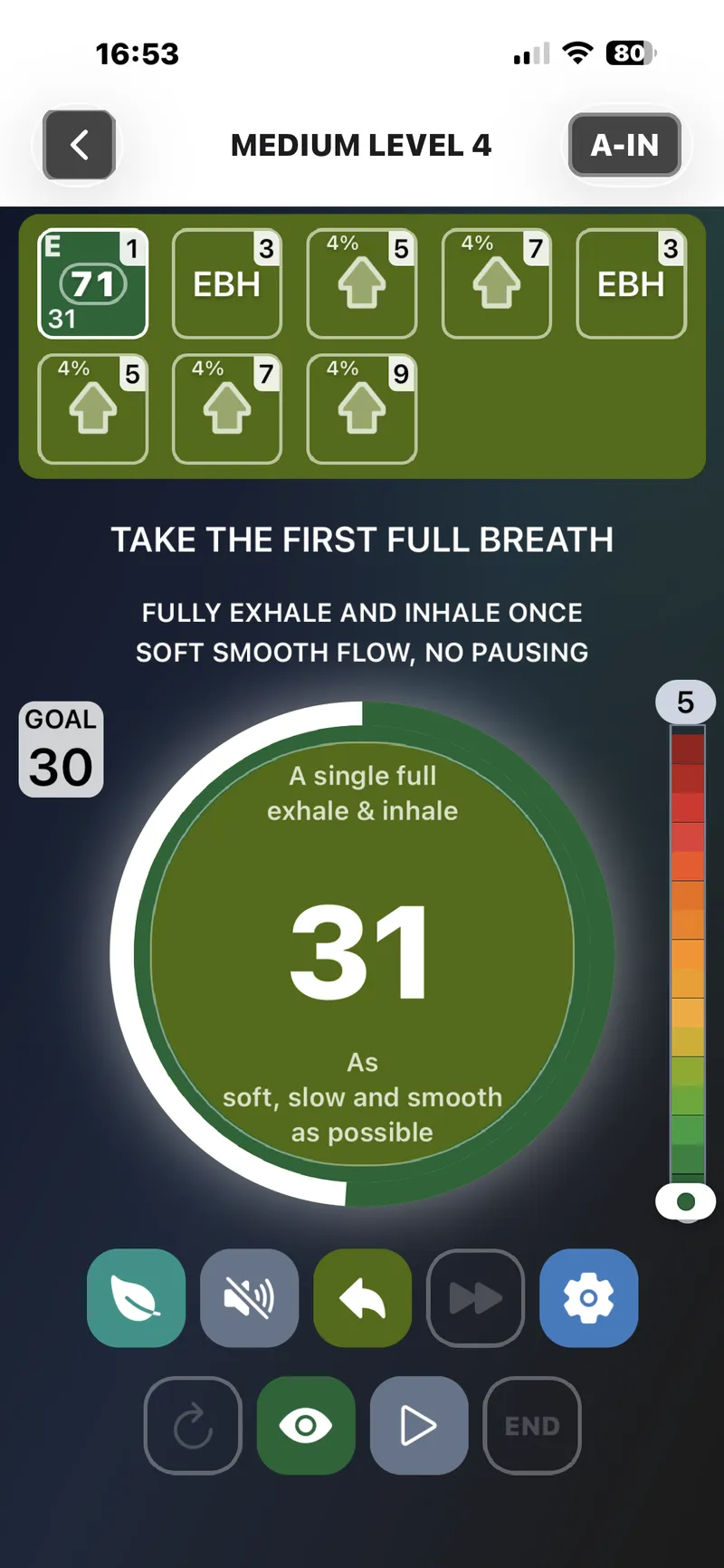
Each round scores your effort and your calm. Stay in the green zone to get more oxygen from less air.
-
It adapts to you
Every session starts from where your body is today, not where it was last week.
-
Live guidance and scoring
Cues as you breathe, and a nervous-system score when the round ends.
-
Nothing to wear
No chest strap, no sensors. Your breathing is all you need.
The question behind the project
Why This Exists
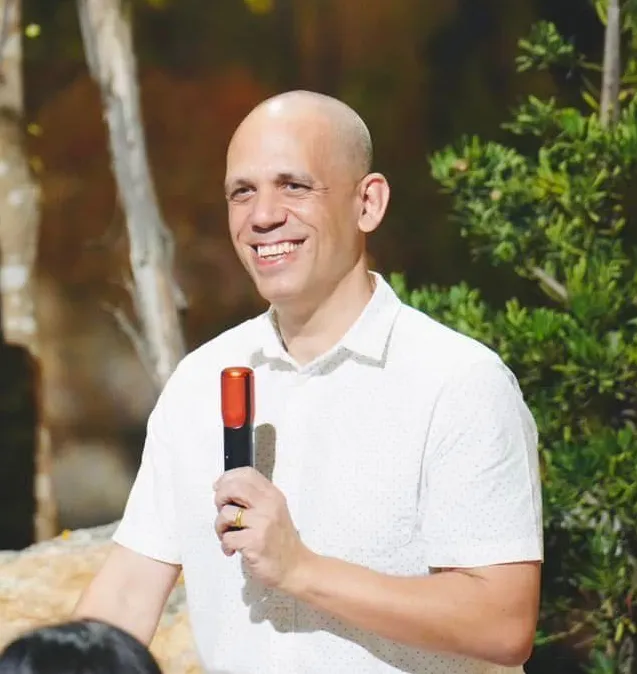
Eighteen years of teaching Buteyko breathing left me with a question. Early on I taught the strongest version of the method. It provided the best results, but many people found it too intense to sustain long-term. I adapted the approach to give people more control over their own intensity and encouraged lower intensity for better long-term results. But the question stayed open: if the strongest version works best, is there a way to make it easier to do and easier to teach?
Over the last ten years, I took an increasingly experimental attitude to the practice. I was particularly interested in ways that allow effective training while measuring how the training impacts body and mind. Achieving this required changes to the exercises that went beyond the Buteyko framework and were inspired by pranayama and Tummo.
That also required a new app: new exercise flows, a wider selection of variants, a walking version, and sensor-free stress detection that finds the right intensity for you. Zones show your position in real time and tell you whether a breath-hold was right or too strong. Relaxation is at the center of the design, because the deeper you relax, the better you perform.
Start with the free Foundation Course.
Foundation Course
Sign up and your course starts. Go at your own pace in the app. Join the Foundation Weekend to go deeper with an instructor.
Follow-up Courses
After Foundation, continue with the Immersion and Summit courses. Or join a live weekend event.
12
Exercise Styles
- Intro, Feather, Soft, Soft+,
- Medium, Medium+, Strong, Strong+,
- Extreme, Extreme+, Complete, Walking
100+
Combinations
- 14 levels per style:
- Levels 1–13 plus
- recovery level
You set the direction: a level and style your body can handle and your mind enjoys. From there, the app handles the moment to moment, setting and adjusting your targets as you progress through the session.
What's Different
Traditional exercises to improve oxygen efficiency have four limitations. We resolve all four.
Traditional exercises
The Reuvers method
Problem 1: Years-long preparation
In the classical lineages of yoga and Tummo, years of preparatory practice are required before accessing the most effective breathing exercises.
Solution 1: Start today.
Our program is designed so you can start practicing and get results from day one. Most people notice real changes within 60 days.
Problem 2: Instructor dependency
Results depend on having a highly skilled teacher. But it takes years and thousands of students to become one.
Solution 2: The app knows how you breathe.
It guides you directly, round by round. Instructors use the same reading.
Problem 3: No stress detection
Intense breathing exercises can create subtle forms of tension and emotion without you realizing it.
Solution 3: See your stress in real time.
The app shows your nervous system state in real time, helping you relax deeper.
Problem 4: One size fits all
One intensity for everyone doesn't work. For some it is too low, for others it is too high.
Solution 4: The exercise adapts to you.
You choose your level and style, and the app adapts the exercise to how you perform and how relaxed you are.
Oxygen Efficiency: The Science
Oxygen efficiency training is backed by decades of research. These are the results.
7–8s
Faster per km after breath-hold training
+24%
EPO production after repeated breath-holds
60%
More efficient CO₂ response when trained
VO₂max
Better running economy with nasal breathing
+9.5%
Hemoglobin after breath-hold diving
+30.5%
Longer breath-hold from training
Go Deeper
Learn more about oxygen efficiency and how your nervous system responds.
More Oxygen from Less Air
How CO2 tolerance and minute volume work together to improve oxygen efficiency and clear the oxygen traffic jam.
Learn more →The Nervous System
How the instinct and intellect share control of the breath, and how the app detects your nervous system state to score your breathing and adapt exercise intensity.
Learn more →Meet Our Instructors
Certified instructors ready to guide your breathing practice.
Upcoming Events
Programs run throughout the year. Start free, then progress through the stages at your own pace.
Common Questions
Here are answers to common questions about the Reuvers™ program.
What does this practice do for me?
What results can I expect?
Why does it work?
Why does breathing less give you more oxygen?
Is there scientific evidence?
What makes this different from other breathing apps?
How does the app optimize my practice?
Is this suitable for beginners?
Are there any side effects?
How often should I do the exercise?
How do I know I'm making progress?
Are there any conditions I should be aware of before starting?
Contraindications: Who should NOT do the exercise?
Stay Connected
Breathing practice insights, program updates, and what we're learning from the research.
How Does This Help You?
What it adds, practice by practice.
Breathwork practitioners
It scores your breath-hold length and your recovery breath. Push too hard, and it shows.
Endurance athletes
One session trains respiratory strength, CO2 tolerance, and pattern. Your recovery breath gets scored.
Strength athletes
Trains the gas tank so you don't gas out. Each round of the session scores your recovery.
Mind-body & somatic practice
We steer you toward rest and recovery. Each round scores it.
Meditators
Graded holds shape the breath toward that quiet state. Actively, not just observed.
Yoga & pranayama
Breath retention and humming carry into the round. It adds a scored recovery breath.
Freedivers
A dry, land-based round that trains CO2 tolerance and scores the calm of your recovery breath.
Biohackers
One scored protocol covers CO2 tolerance, breath-holds, and HRV recovery. No wearable needed.