The Method
Guide your breath without forcing it.
Draw more oxygen from less air, and let your nervous system settle. Learn to listen to your body and your instincts.
The Practice
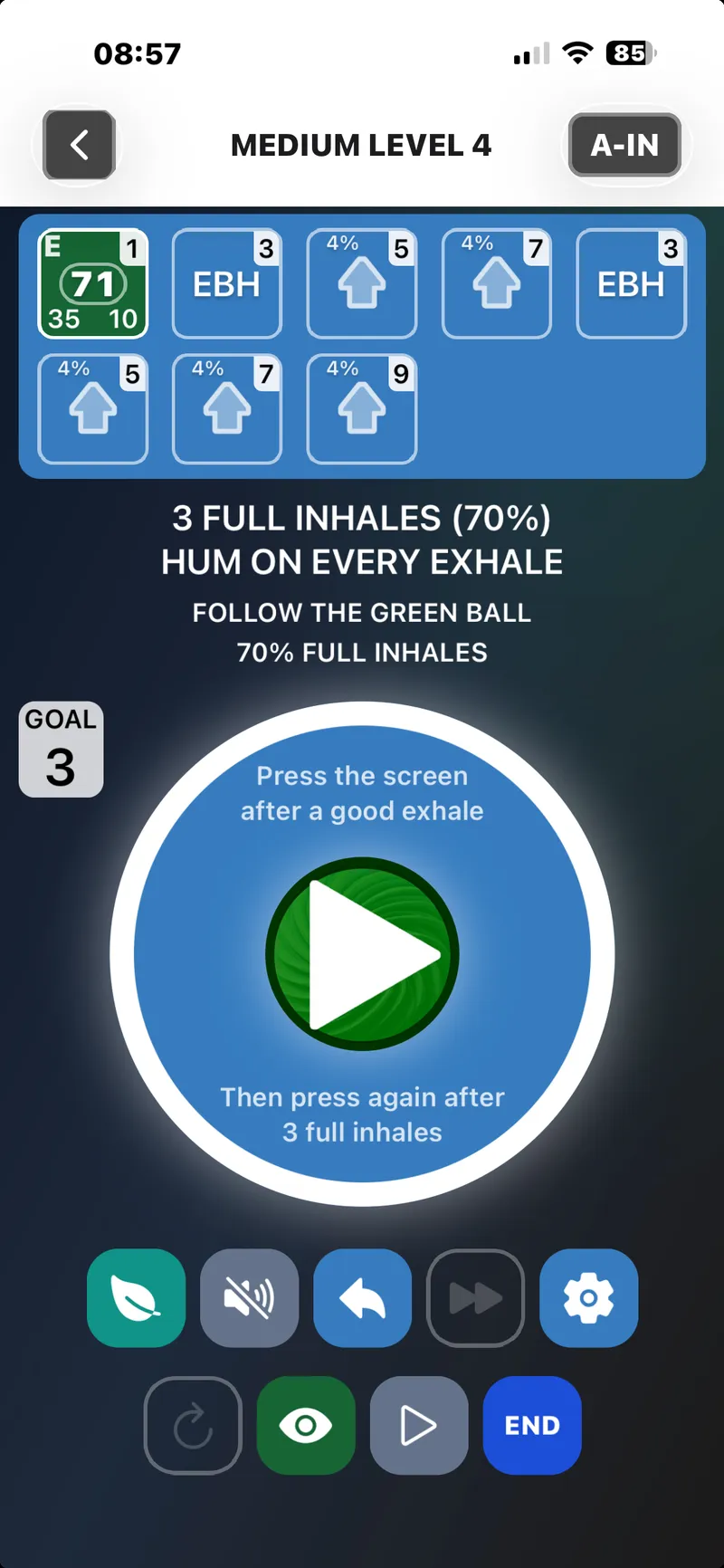
Each round moves through six stages, and a session is a series of rounds. The preparatory big breaths are optional, skipped in the gentle style.
- 0
Preparatory big breaths
OptionalFull, brisk breaths that strengthen the breath and set up a longer hold. Skipped in the gentle style.
- 1
Main breath-hold
CoreThe centerpiece of the round, where oxygen efficiency is built.
- 2
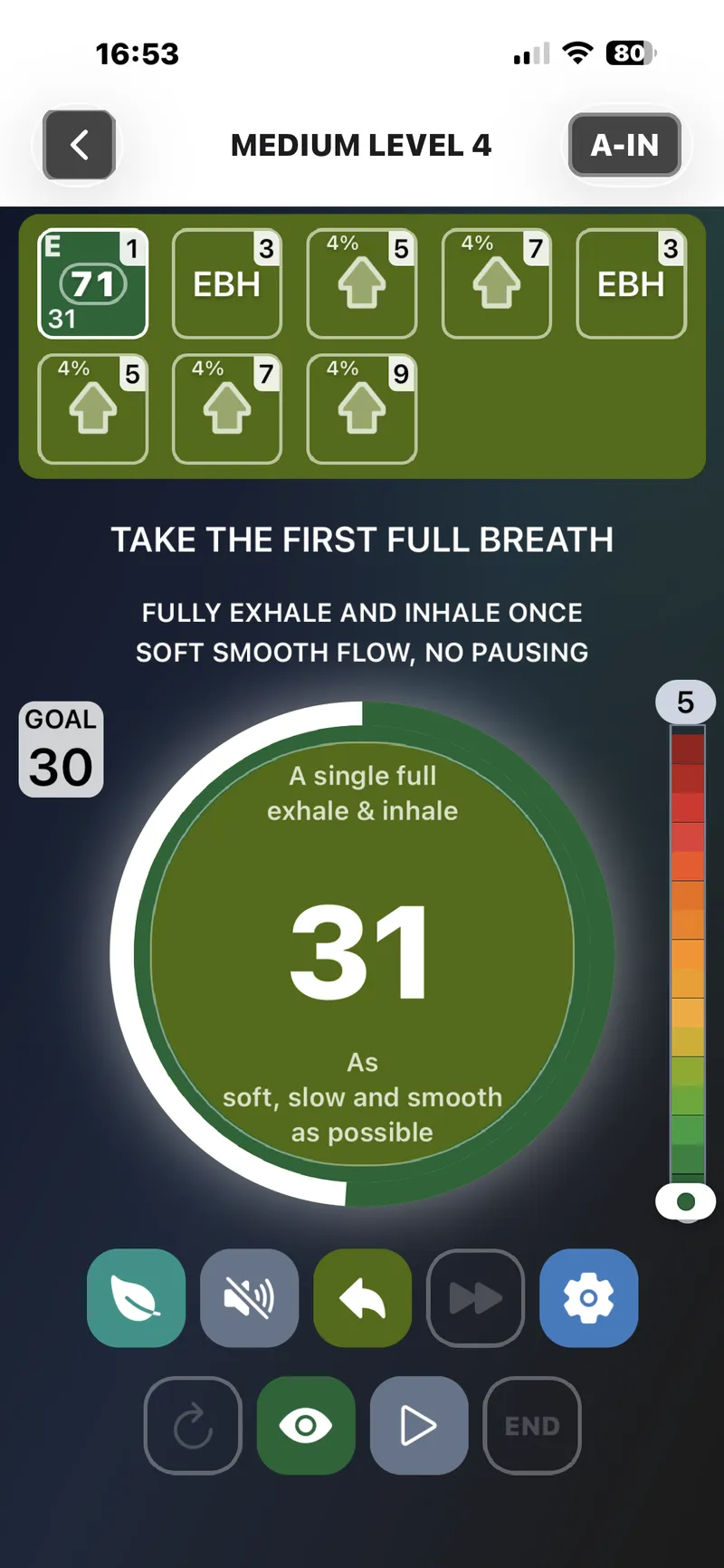
First full breath
CoreOne soft and slow breath, scored: a smooth one means you stayed gentle.
- 3
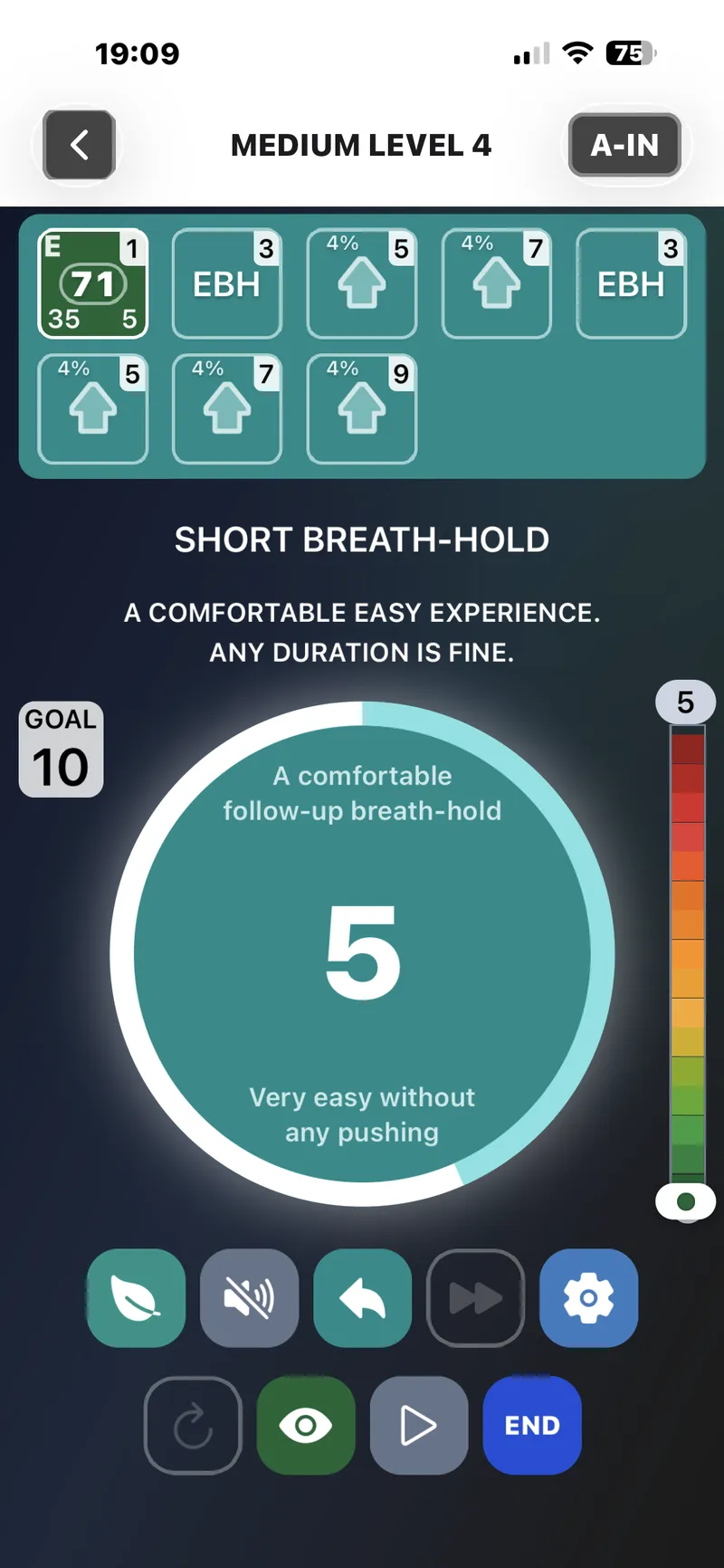
Follow-up breath-hold
CoreA short, easy hold that consolidates the main one. Never challenging.
- 4
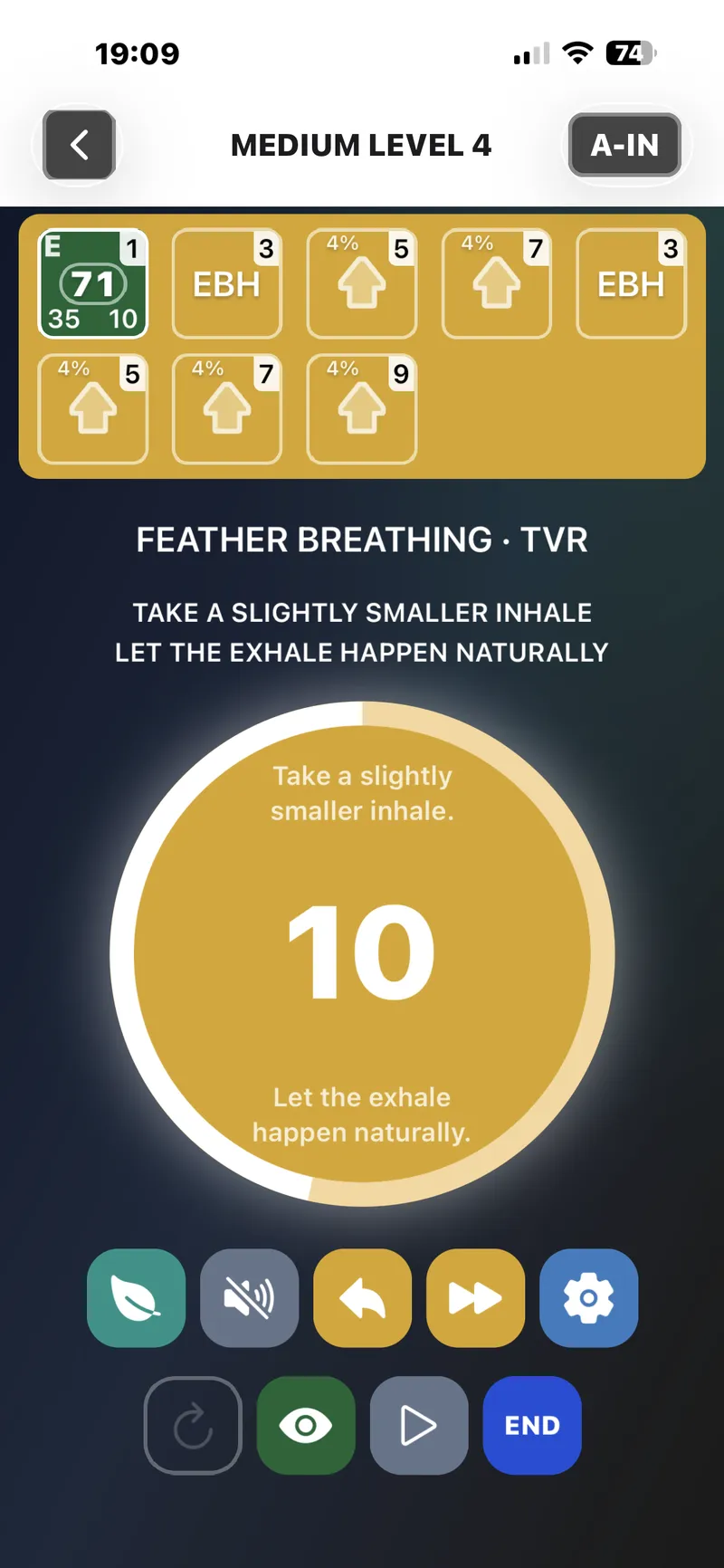
Feather breathing
CoreLet the breath go light and the calm settle.
- 5
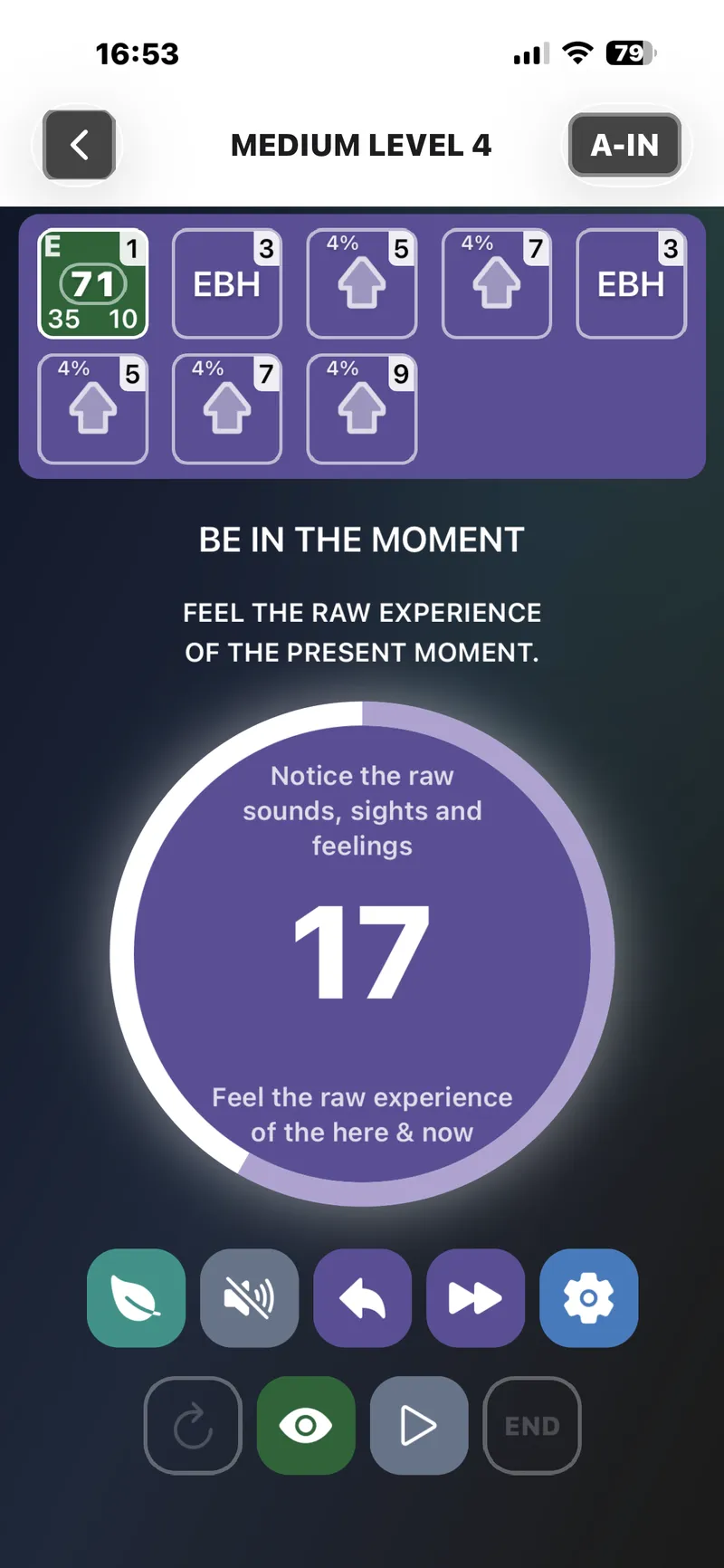
Contemplation
CoreDrop into the moment and integrate.
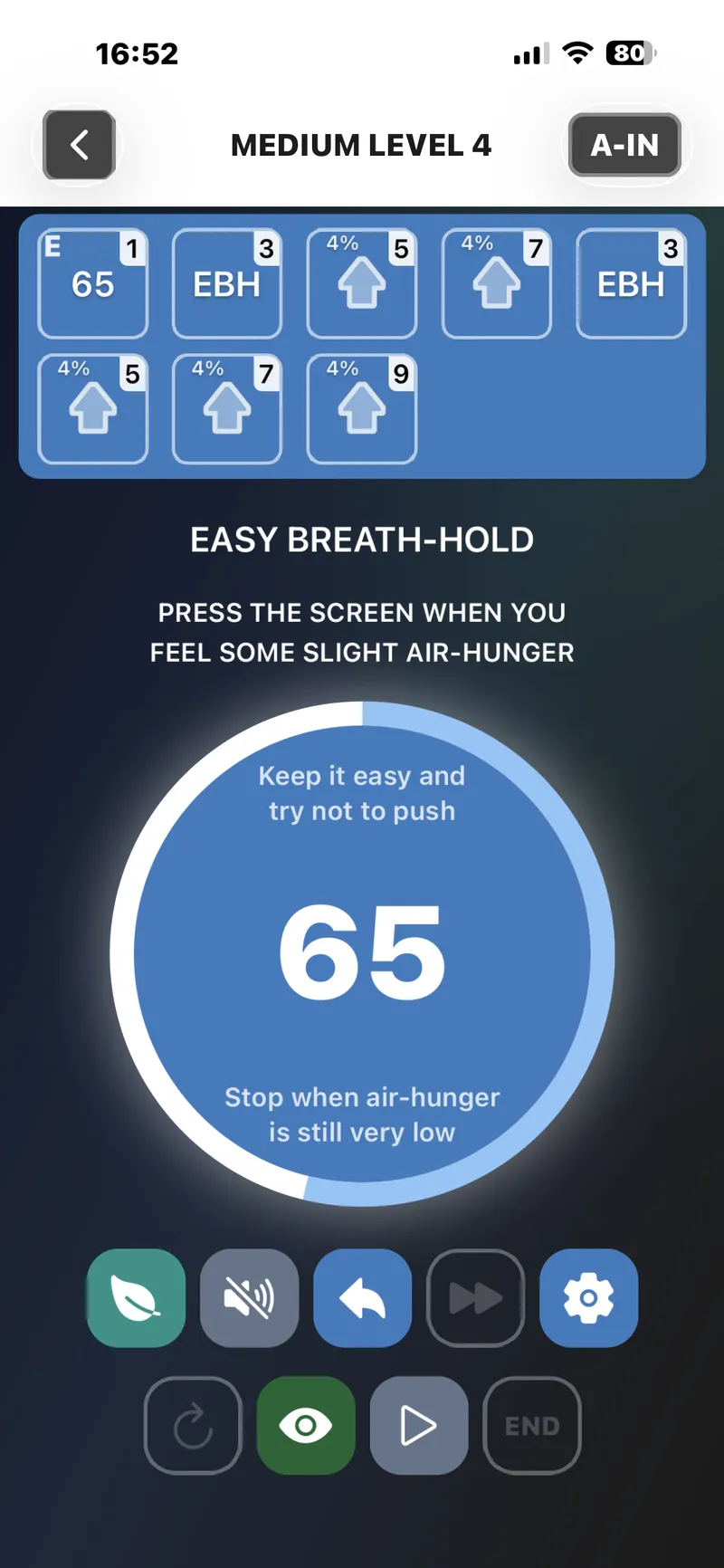
The app guides you through the stages. It shapes every round to how you are performing right now, so no two rounds are the same and nothing runs on fixed numbers.
Let the app guide you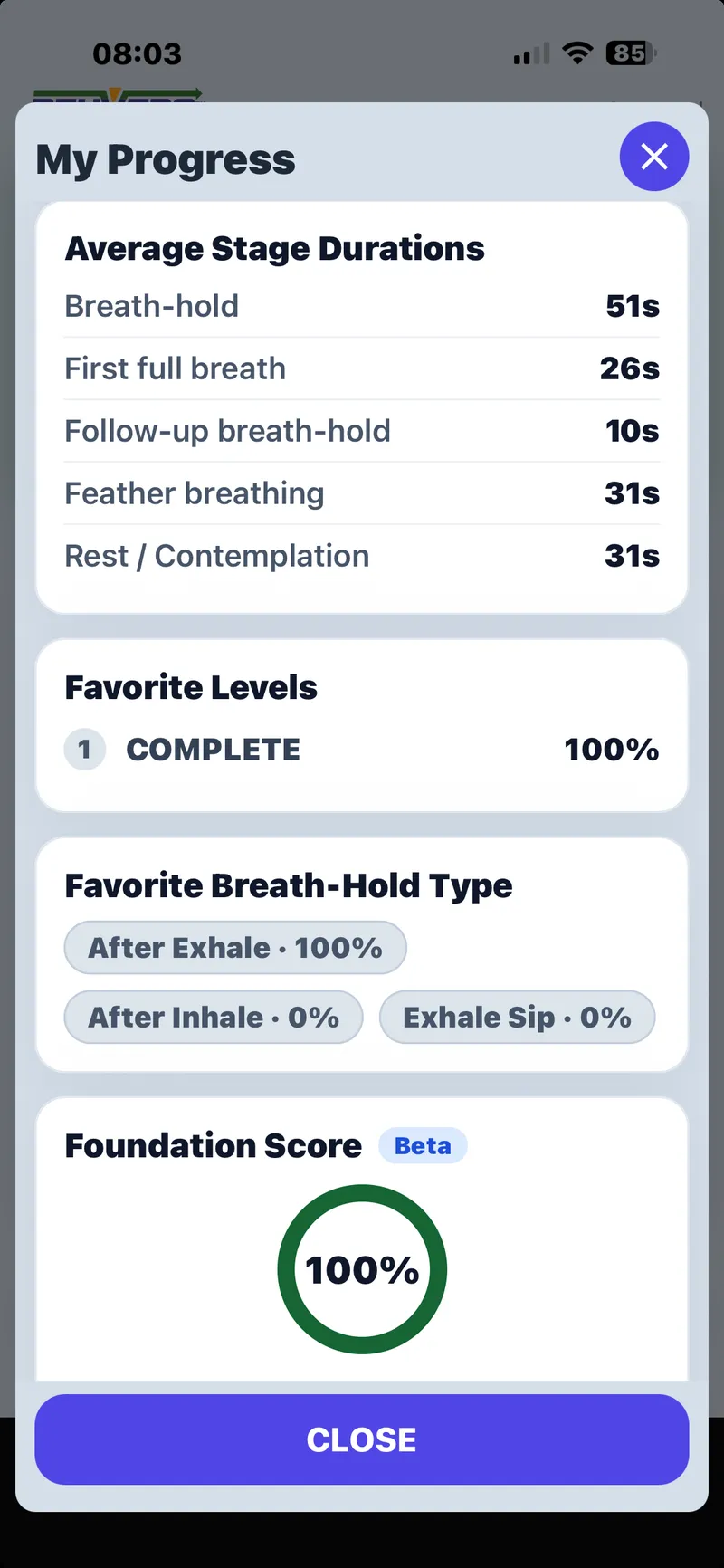
Sitting and Walking
Two sessions that complement each other. Choose what suits the moment.
Sitting
A meditative challenge
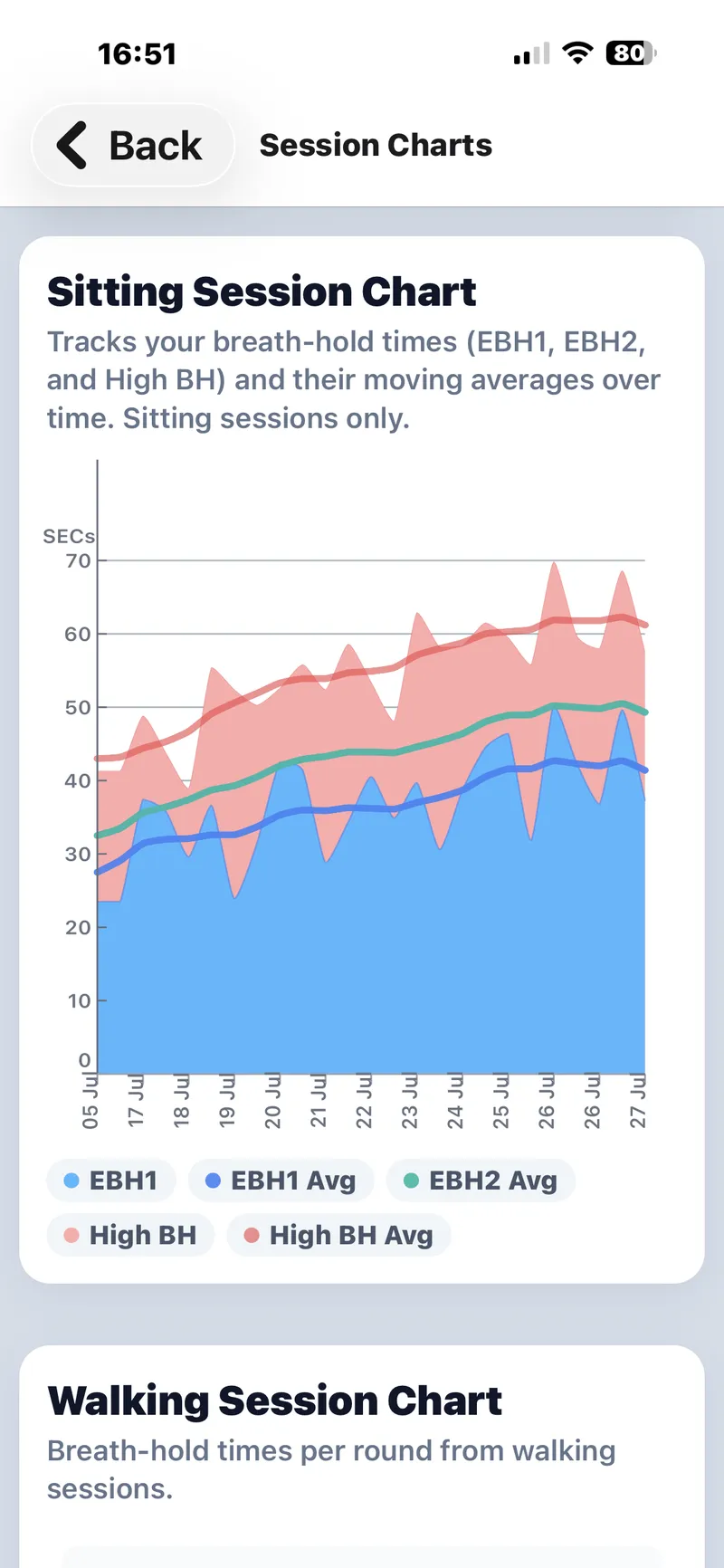
Stillness, big breaths, breath-holds, slow and soft breathing, and contemplation to close. You sit, you relax, and explore the challenge. Don't go too far, don't go too easy.
Greener zones, better holds, smoother recovery. Go deeper.
Improve oxygen efficiency in stillness.
Walking
A physical challenge
Breathing intensity meets physical movement. You walk, you breathe, you build fitness. The zones help set your pace and effort.
Raise your oxygen consumption while using less air. Push further.
Improve oxygen efficiency in motion.
Both practices build oxygen efficiency. One in stillness, one in motion.
Make the Practice Yours
The breath-hold is the centerpiece of every round. There are three ways to do it, and the choice is yours.
Breath-hold After Inhale
The natural start (for beginners)
You hold on comfortably full lungs, around 70 percent. Holds run longer, and it stays easier to relax and focus.
Breath-hold After Exhale
The honest measure (experienced practice)
You hold on comfortably empty lungs, never fully empty. Holds run shorter, and give a truer read on your breathing.
Exhale Sip Breath-hold
The longest holds (advanced practice)
You start empty and take three to five sips of air during the hold, never filling past 70 percent. Air hunger stays manageable throughout. It suits walking sessions especially well.
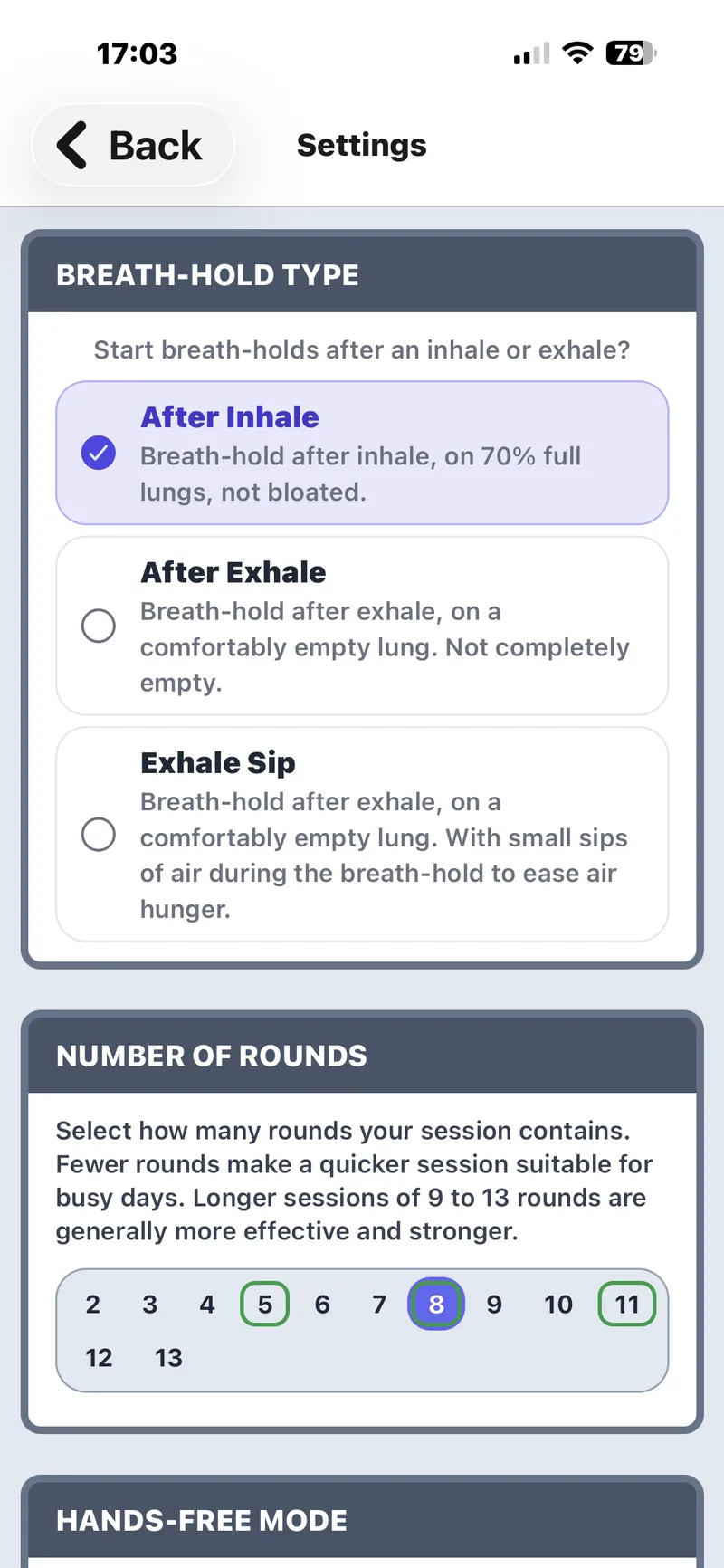
You can further adjust the number of rounds, preparatory breaths, feather breathing and contemplation. Every part of the session is yours to set.
Explore it playfully. Change one thing at a time. Your own experience tells you what fits, and an instructor guides you to what works best for you.
Your Daily Practice
How often to practice, when to fit it in, and how to adjust as you go.
How often should I do the exercise?
Can I customize the exercises to match my personal preferences?
Can I do the exercise immediately before sleep?
Can I do the exercise immediately after a meal?
Can I do the exercise immediately after a physical workout?
Should I aim for slow or rapid progress in scores?
I'm not feeling very well today. Can I do the exercise?
Chemistry + Calm
Train one without the other, and progress stalls. Train both together, and they carry each other forward.
Chemistry
Oxygen efficiency
Breathe slower. Breathe softer. Hold your breath longer while in a relaxed state.
How CO2 tolerance clears the oxygen traffic jamCalm
Nervous System Regulation
How relaxed are you? The zones read your state and score it in every round.
How the zones read your nervous systemHow do the zones work?
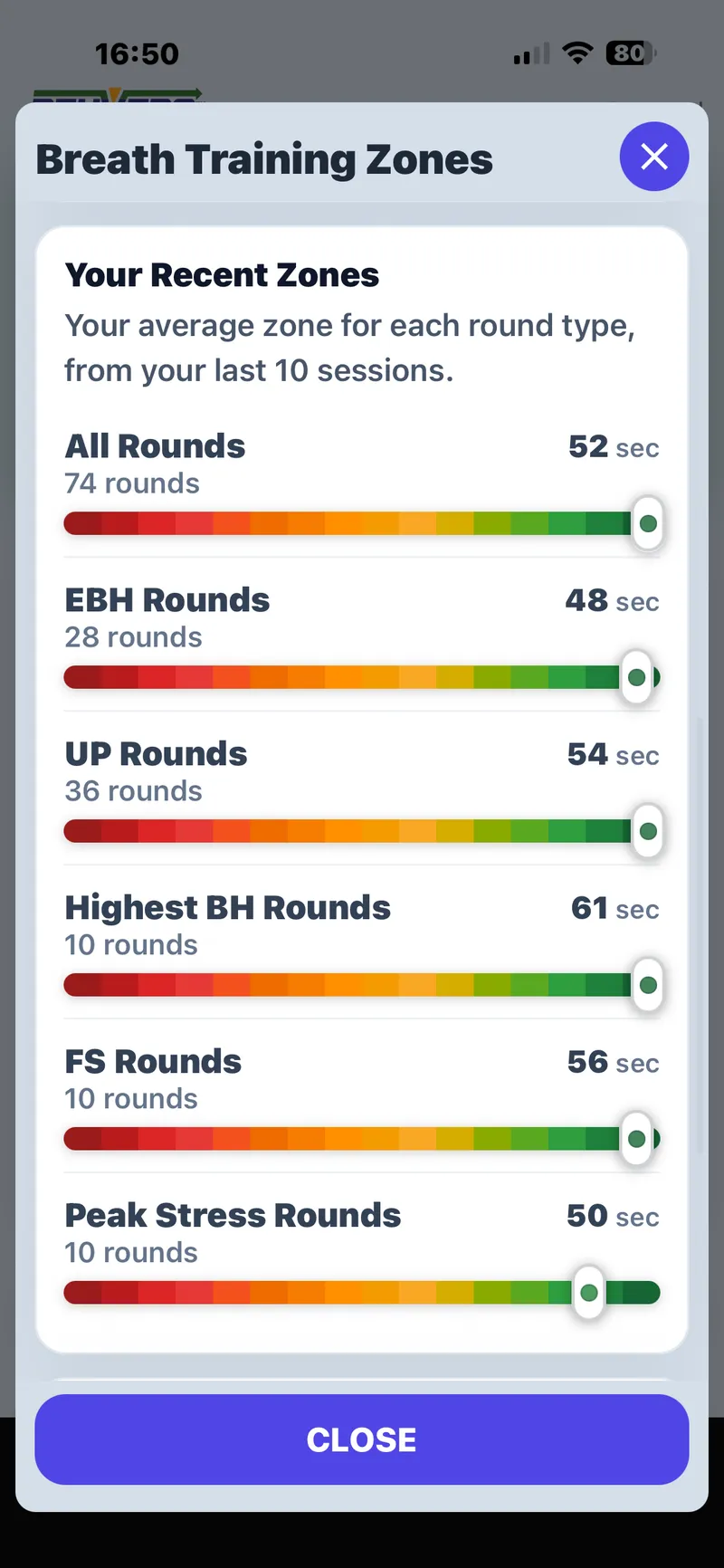
Zones show your breath training intensity. Like heart rate zones, but for breath and relaxation.
Green is rest and relaxation. Red means stress mode. In the higher levels, you deliberately move between states. See the full theory.
Reuvers™ Breath Training Zones
Read Your State
We combine a comfortable breath-hold and the quality of your first breath afterwards into one clear picture.
A green score is a quality mark. It means you stayed relaxed, and relaxed is where the training works best.
Scored via Instinctual Response. Detected without a wearable via Stress Detection.
Real-Time Guidance
Your exercise adapts in real time:
- Green zones: You stayed relaxed, so for the next round, we raise the target a bit.
- Red zones: You pushed too hard, so the next round has an easier target.
See exactly how the target adapts: Intensity.
Train in the Flow
Three levels of zone-guided intensity:
- Gentle practice: Relaxed breathing, easy targets.
- Moderate practice: Longer holds, higher targets.
- Powerful practice: Deep relaxation powers a peak effort.
Everyone's different. Instructors help you progress safely.
Follow the timer and audio cues. Zone tracking happens automatically. You focus on your breath.
From Guessing to Knowing
Every round shows you how you did. You see it. You know it.
Guess without Zones
Know with Zones
You can't see where you are
You may wonder if you did it right.
You see where you are
After every round, you know exactly how you did.
You're not quite sure
Easy to push too hard or hold back too much.
You practice with confidence
If you overdo it, you see it immediately.
You end up guessing
No score for relaxation or tension.
You earn a quality mark
Every round gets scored. Green means relaxed. See why that matters.
Consistent practice at the wrong intensity holds you back. Zones show you the right intensity to practice at today.
What's Different
Traditional exercises to improve oxygen efficiency have four limitations. We resolve all four.
Traditional exercises
The Reuvers method
Problem 1: Years-long preparation
In the classical lineages of yoga and Tummo, years of preparatory practice are required before accessing the most effective breathing exercises.
Solution 1: Start today.
Our program is designed so you can start practicing and get results from day one. Most people notice real changes within 60 days.
Problem 2: Instructor dependency
Results depend on having a highly skilled teacher. But it takes years and thousands of students to become one.
Solution 2: The app knows how you breathe.
It guides you directly, round by round. Instructors use the same reading.
Problem 3: No stress detection
Intense breathing exercises can create subtle forms of tension and emotion without you realizing it.
Solution 3: See your stress in real time.
The app shows your nervous system state in real time, helping you relax deeper.
Problem 4: One size fits all
One intensity for everyone doesn't work. For some it is too low, for others it is too high.
Solution 4: The exercise adapts to you.
You choose your level and style, and the app adapts the exercise to how you perform and how relaxed you are.
What Changes
The changes that build as the practice becomes part of your day.
-
A calmer nervous system
You settle into rest and relaxation more easily.
-
Better sleep
Calmer breathing carries into deeper, more restful nights.
-
More energy
More oxygen from less air, hour after hour.
-
Sharper focus
A quieter mind holds attention for longer.
-
Steadier under stress
Composure holds where it used to slip.
-
Fitness and stamina
More endurance in motion, from a walk to a workout.
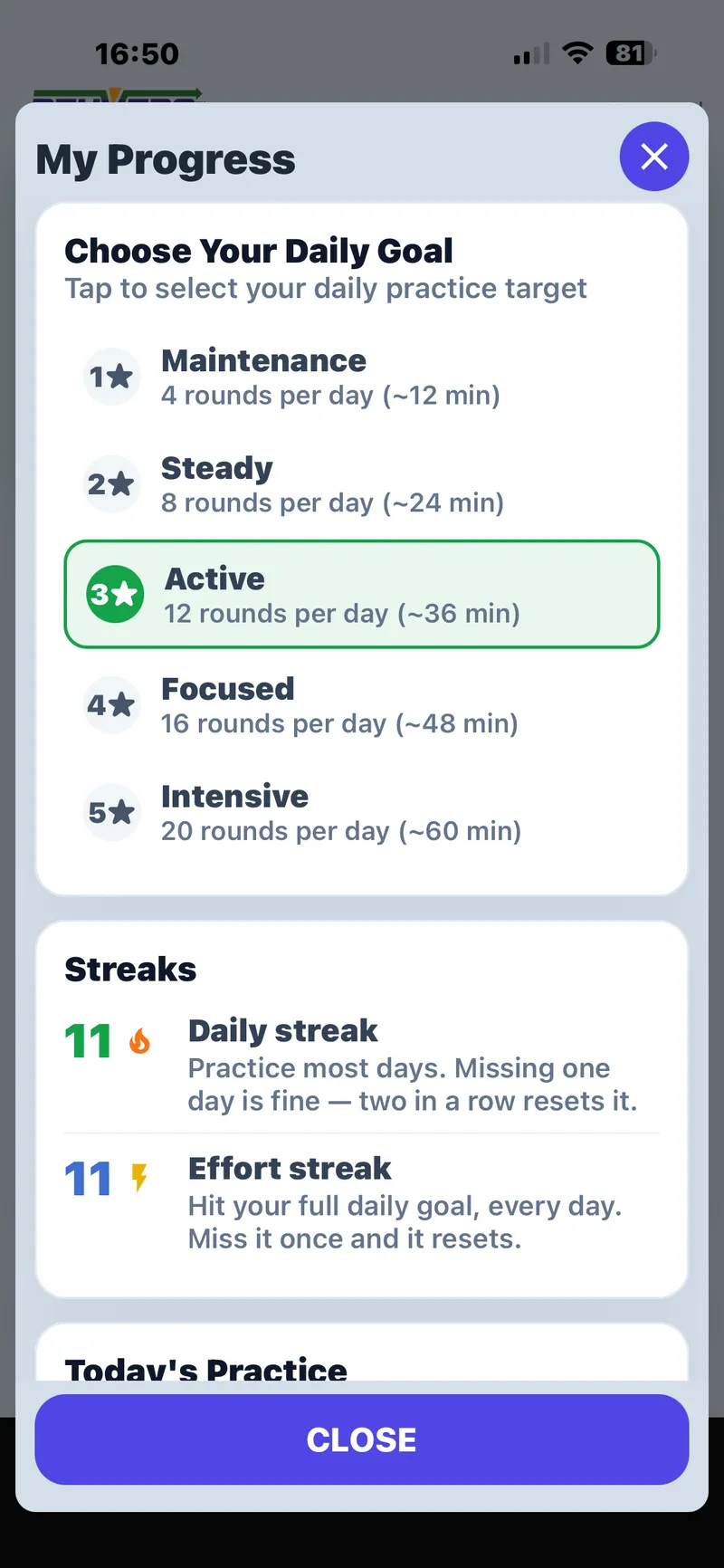
Practice most days and the changes build, gathering momentum over time. Set a daily goal and the app keeps the count, so your practice stays visible and progress accumulates.